
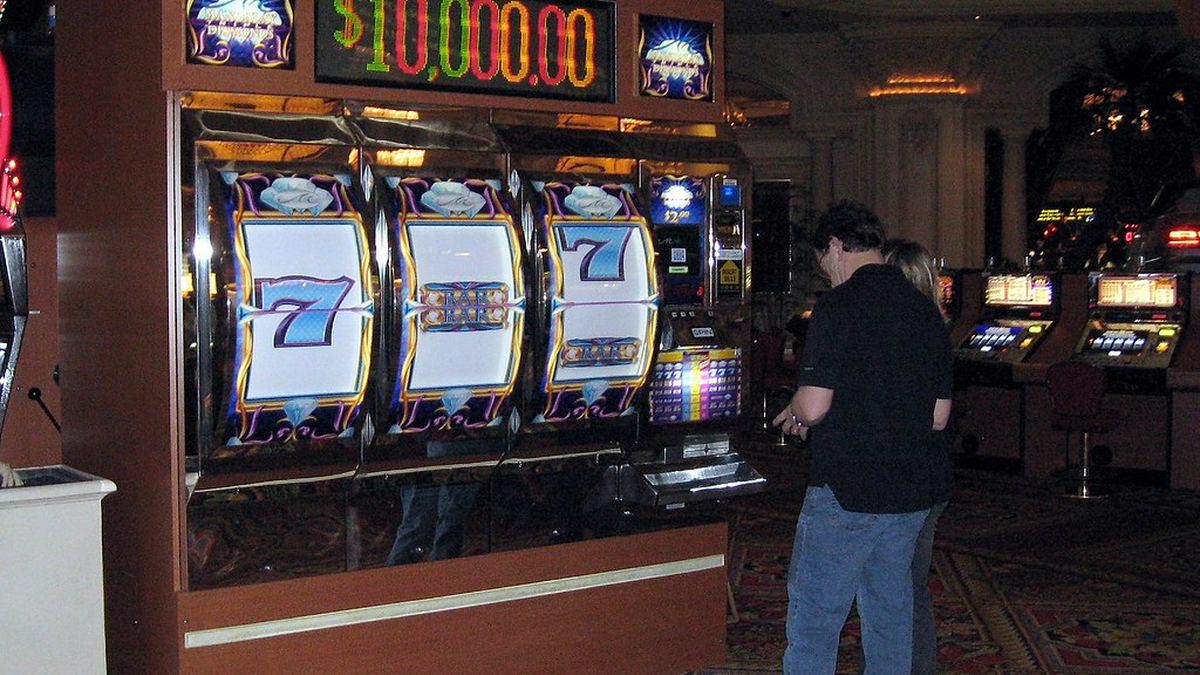
'A malfunction voids all pays and plays' is a standard line in slot and casino game rules: if the game breaks, the round does not count, win or lose. In Green v Petfre (Gibraltar) Ltd t/a Betfred, decided on 7 April 2021, the English High Court refused to let an operator use that line, and related exclusion clauses, to withhold £1,722,500.24 won on a blackjack game, holding that 'malfunction' naturally means something like 'a detectable breakdown or interruption in service'.
- The Betfred game rules said: 'Note on malfunctions: a malfunction voids all pays and plays.' The term was not defined.
- The High Court held the exclusion clauses were not brought to the player's attention and failed the Consumer Rights Act 2015 fairness test.
- UK technical standard RTS 10 requires systems that can void gambles and restore the stake when play is interrupted.
- Gambling Commission guidance says the default remedy for a game paying out wrongly is to reimburse affected players directly.
On this page
What the clause says
The wording varies, but the idea is the same everywhere: 'Malfunction voids all pays and plays.' If a game malfunctions, any win produced during the malfunction is cancelled and any stake on the affected round is treated as if it had not been played. In online game rules it usually sits near the bottom, often under a heading such as 'Note on malfunctions', and it is rarely defined.
On its face the clause cuts both ways. A player who loses a stake because a game froze mid-round should get it back; a player whose screen shows an impossible win should not be paid it. The disputes arise because the clause is short, vague, and usually invoked by the operator after the event, when a large win has already been displayed.
Where it comes from
The phrase belongs to the casino floor, where it is printed on slot machines themselves, and the same words now appear in the rules of online slots and table games.
The best-known land-based example is a 2016 case at Resorts World Casino in Queens, New York. A penny slot displayed a cash-out message of about US$42.9 million. As reported by CBS New York, the New York State Gaming Commission examined the machine's log and said it showed the player was entitled to US$2.25; the larger figure was a display malfunction, the machine's maximum payout was US$6,500, and 'Malfunctions void all pays and plays' was posted on all machines in the casino. The machine was repaired and returned to service. That case shows the clause doing what it was designed for: a physical fault, a log that records the true outcome, and an independent regulator that checks it.
Online, the elements are different. There is no sticker on the cabinet, the 'log' is held by the studio or operator, and for offshore sites there may be no regulator that examines it.
The Betfred case: a malfunction clause tested in court
The leading English decision is Green v Petfre (Gibraltar) Ltd t/a Betfred [2021] EWHC 842 (QB), decided by Mrs Justice Foster on 7 April 2021. Andrew Green played 'Frankie Dettori's Magic Seven Blackjack' and his account recorded winnings of £1,722,500.24. Betfred refused to pay, saying a software defect had affected the game.
Betfred relied on several layers of terms, including the game rules, which said: 'Note on malfunctions: a malfunction voids all pays and plays.' The court noted that 'malfunction' was not defined anywhere. Its key findings:
- Meaning of 'malfunction'. In context the word naturally means 'something in the nature of a detectable breakdown or interruption in service'. Applying it to a game that played normally but paid more often than intended would require 'a strained and unnatural meaning'.
- Exclusion clauses. The clauses Betfred relied on were not apt to cover a failure to pay out winnings. One was described as 'conspicuously obscure' about payments to the player.
- Incorporation. 'None of the terms seeking to exclude liability was sufficiently brought to the attention of Mr Green'; they were 'buried in other materials'.
- Fairness. The clauses 'fell foul of the requirements of the statutory obligation of fairness' under the Consumer Rights Act 2015.
- Mistake. The judge found that 'the doctrine of mistake has no role to play in this case'.
Mr Green won summary judgment. The case is English law and does not bind an Australian court or a Curaçao or Malta regulator, and it was decided at summary judgment, so the technical evidence about the fault was not tested in full. But it is the clearest judicial reading of the clause, and its reasoning on vague wording and hidden terms is a useful reference point in any dispute over the clause.
What regulators require when a game fails
Licensed markets do not leave faults to the small print. The UK Gambling Commission's Remote Gambling and Software Technical Standards cover both interrupted games and games that pay incorrectly.
| Situation | UK standard or guidance | What it requires |
|---|---|---|
| Interruption after the bet is received and the player can no longer influence the outcome | RTS 10A guidance | The result of the gamble should stand |
| Interruption to a single-stage game before an outcome is generated | RTS 10A guidance | Any deducted stake should be returned to the balance |
| Interruption to a multi-stage game | RTS 10A guidance | All reasonable steps to restore the last known state so the player can finish |
| Recovering from failures | RTS 10B | Systems able to void gambles, restore the amount staked and keep enough information to restore the pre-failure state |
| Telling players | RTS 10C | Operators must publish their policies on service interruptions |
| Unexpected faults or errors | RTS 5A | Remedy as soon as practicable, treat the customer fairly, notify affected customers and correct the error |
| A game confirmed to under- or over-pay | Payment faults guidance | Report within five days; take the game down until fixed and retested; reimburse affected players directly |
Two points stand out. First, the UK standard on interruptions protects the player as much as the operator: if the outcome was already fixed when the connection dropped, the result stands. Second, on games that pay wrongly, the Commission's guidance says 'the default and expected remedy is to directly reimburse the affected players', and repayment should not depend on a minimum spend. A malfunction clause in a licensed UK game therefore sits inside a framework that also obliges the operator to fix the fault, report it and pay back players who were short-changed.
How this applies to offshore casinos serving Australians
Online casinos cannot be licensed in Australia. Under the Interactive Gambling Act 2001 it is an offence to offer them to people in Australia, so an offshore casino's game rules and terms are governed by its own licensing jurisdiction and whatever law its terms nominate. The UK technical standards do not apply to it, and neither does the Consumer Rights Act 2015.
That has practical consequences. The operator's terms may define 'malfunction' broadly, give it sole discretion to decide when one occurred, and say nothing about refunding stakes. The game log that would settle the question is held by the studio or the operator. And if the operator invokes the clause, the dispute goes to the operator's own complaints process and then, depending on the licence, to its regulator or an alternative dispute resolution service. Our guide to checking a casino's safety signals and the blacklisted casinos list show how licence and complaint history are assessed.
Reading the clause before you play
Because the clause matters most after a large win, the time to read it is before the first deposit. A few questions separate a narrow, balanced clause from one that leaves everything to the operator:
- Is 'malfunction' defined? An undefined word was central to the Betfred dispute. A definition tied to a detectable fault, error message or interruption is narrower than one covering any outcome the operator did not intend.
- Who decides? Wording that gives the operator 'sole discretion' to declare a malfunction leaves the player with little to point to.
- Does it cut both ways? A fair clause refunds stakes on voided rounds as well as cancelling wins. Clauses that mention only winnings deserve a second look.
- Where is it? Game rules, general terms and bonus terms can each contain a version. The Betfred judgment criticised terms that were 'buried in other materials'.
- Is there a complaints route? Terms that name a regulator or dispute service give a player somewhere to go if the operator invokes the clause.
What a player can do if a win is voided
- Record everything at once. Screenshot the result, the balance, the game name and the round or transaction ID, and note the time. Many games show round history in an info or history panel.
- Ask for the specifics in writing. Which clause is relied on; what the fault was; whether it was confirmed by the game studio; and what the game log shows as the true outcome of the round.
- Ask what happens to the stake. A voided round should, on any fair reading, return the stake on that round. The UK standard requires the system to be able to do exactly that.
- Check the terms as they stood at the time. Was 'malfunction' defined? Was the clause in the game rules, the general terms, or both? The Betfred judgment turned partly on how hard the clauses were to find.
- Escalate if needed. If the operator will not engage, the route depends on its licence; see where to complain about an offshore casino.
A voided win is a frustrating experience and can push some players to keep playing to 'win it back'. If that is happening, Gambling Help Online is available on 1800 858 858, and BetStop, the national self-exclusion register, covers licensed Australian wagering services.
Questions readers ask
What does 'malfunction voids all pays and plays' mean?
It means that if a game malfunctions, any win produced during the malfunction is cancelled and the affected round is treated as not played. The clause usually appears in game rules and is rarely defined.
Can a casino refuse to pay a win by calling it a malfunction?
It depends on the terms and the law that applies. In Green v Betfred (2021) the English High Court held that 'malfunction' meant a detectable breakdown, and that the operator's exclusion clauses were not incorporated and were unfair, so the £1.7 million had to be paid.
Should I get my stake back if a game is voided?
Under the UK technical standards, a single-stage game interrupted before an outcome is generated should return the stake, and systems must be able to void gambles and restore the amount staked. Offshore operators follow their own licence rules.
What evidence should I keep if a win is voided?
Screenshots of the result and balance, the game name, the round or transaction ID and the time. Then ask the operator in writing what the fault was and what the game log shows.
Sources
Every figure and date in this article comes from the documents below; we re-check them when a source changes.
- Green v Petfre (Gibraltar) Ltd t/a Betfred [2021] EWHC 842 (QB) — The National Archives
- UK Gambling Commission — RTS 10: Interrupted gambling
- UK Gambling Commission — RTS 5: Result determination
- UK Gambling Commission — Remote game and/or software payment faults
- CBS New York — Resorts World casino slot machine malfunction (New York State Gaming Commission statement)
- ACMA — About the Interactive Gambling Act
 TermsSlot RTP versions: why the same game can return 96% at one casino and 88% at anotherStudios such as Hacksaw Gaming publish up to four RTP builds of one slot. The casino picks the build, and the game's info screen is where it shows.7 min read
 TermsThe max-bet rule: how a stake cap in bonus terms works, and how one oversized bet can cost the winningsWorked AUD examples of the maximum-bet clause in bonus terms, what counts as a breach, and what the UK competition regulator said about such terms.7 min read
 MarketsPayID vs Osko vs PayTo vs the NPP: who does what, and why casino deposits look differentFour names for parts of Australia's real-time payment system, what each one actually does, and what changes when the payee is an offshore casino.7 min read